HOW TO CHOOSE SHAMPOO FOR YOUR DOG
Looking for a dog shampoo that will leave him soft, fluffy, and itch-free? It’s time to stop using your own shampoo on your dog. And quit taking him to the groomer who sends him home reeking like cheap baby powder perfume.
Your dog’s health is often reflected in the condition of his skin and coat. If he has allergies, his coat may be flaky and his skin dry and itchy. Underlying more serious problems can manifest this way as well. Warning signs can include hair loss, a smelly odor, bumps, scabs, lesions… really anything that arises quickly or is persistent. We recommend a quick chat with your vet if you are concerned about any changes or issues with your dog’s skin and coat.
Many dog shampoos smell nice and have gorgeous packaging and advertising, but contain chemicals that are harmful to our furry friends. While not everything is going to give your dog cancer, even in the State of California, even the ingredients that can irritate his skin or fur should be avoided. There are lots of great products out there that are non-toxic.
WHY BATHE YOUR OWN DOG?
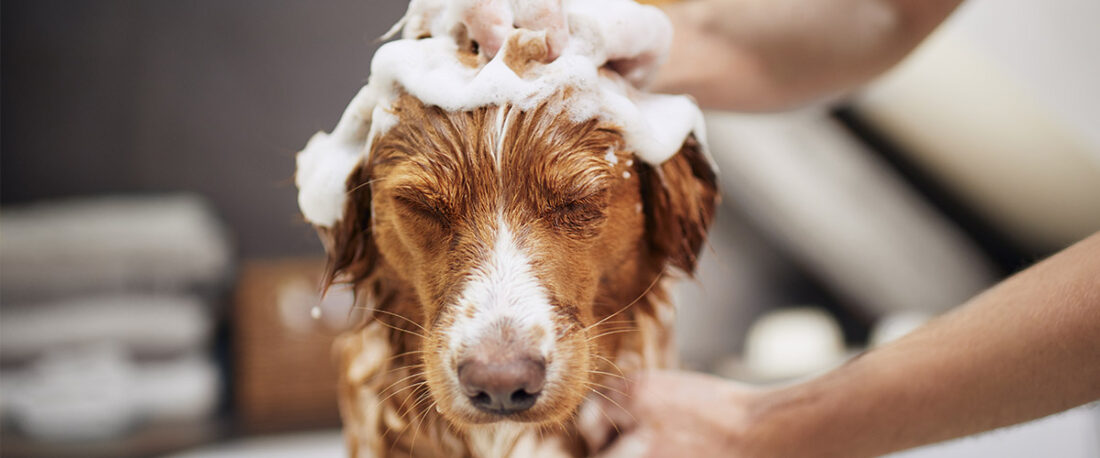
Bathing your own dog allows you to have control over the products used on your dog. Regular baths promote healthy skin and coat, removes dirt and debris from your dog, and gives you the opportunity to check him out up close for any issues or parasites. Unless your dog is one of those special types that jumps in the dirty lake or rolls in smelly things every chance he gets, once or twice a month should be sufficient.
We know. Not everyone can bathe their own dog and that's ok. You can still be proactive about his care. If you are unable to bathe your dog yourself, be sure you know what your groomer is using on him, and if need be, you can provide the shampoo you’d prefer to your groomer.
Many dog shampoos smell nice and have gorgeous packaging and advertising, but contain chemicals that are harmful to our furry friends. While not everything is going to give your dog cancer, even in the State of California, even the ingredients that can irritate his skin or fur should be avoided. There are lots of great products out there that are non-toxic.
When deciding what dog shampoo is best, there’s a lot to cover, so we’re going to divide this up into two areas of consideration: Your Dog and The Ingredients.
Your Dog:
What type of coat does he have?
Dogs with thicker or longer coats will need more frequent washing, grooming afterwards. This type of dog will need shampoo that can penetrate his fur to reach his skin, with a conditioner finish if he has dry skin. Short to medium-length and density fur? These guys are usually pretty easy to please but you will want to be sure you don’t use anything too drying.
Does your dog have any skin conditions or health concerns?
Some owners wait until there’s a problem to bathe their dog. If your dog is suffering from a fungal condition, such as yeast dermatitis, it can cause extreme discomfort and should be checked out by a vet. Strong odors, redness, itchy or infected ears, scaly skin- these should all be looked at. And an antifungal shampoo can help soothe your pup’s skin, but don’t use this long-term unless your veterinarian recommends it.
If your dog has fleas, the average shampoo isn’t going to cut it. Consider one with ingredients that help repel ticks and fleas. If he's got an outbreak, a bath is the first step to attacking a flea problem.
Dry skin may be caused by a number of things but the main offenders are allergies, parasites, skin infections (including bacterial or fungal), or even the climate where you live. Dry skin is often itchy. If your dog suffers from itchy skin, hot spots, or areas he licks a lot he may be suffering from allergies. This could be from his food, dry skin, anxiety, boredom, or even irritation from the soap you use on him. Some shampoos are formulated just for dogs with itchy skin.
How old is your dog?
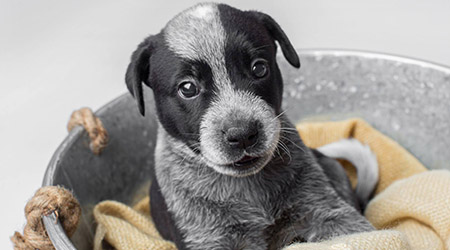
In a perfect world, puppies under six weeks of age are usually taken care of by their mothers and have very sensitive skin, so you should avoid bathing them if possible or use an extremely mild and diluted formula.
Puppies between six to eighteen months can be bathed with puppy-specific or mild shampoo. Senior dogs (nine years and up) may have sensitive skin or allergies as they get older, so proceed with caution.
Of course, if you have a situation with rescue or stray puppies who have fleas, immediate treatment with a flea bath is appropriate and necessary.
The Ingredients:
What goes in dog shampoo? Is “natural” really natural? We can’t cover the entire exhaustive list of what companies have included in the thousands of formulas out there, but here’s a semi- TLDR version:
CLEANING AGENTS
The main ingredient that cleans in a dog shampoo is called surfactants, which contain chemicals that are attracted to soil, and to water. Together, they break down and remove dirt from the dog’s fur and skin. Most dog shampoos out there use synthetic surfactants, including the Big Nasty you’ve probably heard of: sodium lauryl sulfate (SLS). This is what creates those handfuls of luscious lather that make humans think “Clean!” On a more molecular level, SLS strips your dog’s fur and skin of natural oils. Initially, yes, he will look fluffy.
And yes, most formulas also include an ingredient to moisturize. However, these can block pores and keep his skin from naturally eliminating toxins from his body. Not to mention attract more dirt over time. It's best to let him retain some of his skin's own natural oils.
Petroleum-based surfactants are the worst for bathing your dog. It’s kinda like when you got your carpets cleaned with oily soaps that initially made the carpet feel oh so soft and fluffy but five months later….it was attracting even more dirt and grime. We recommend using shampoo with plant-based surfactants, such as saponified oils.
If you see these, put it back on the shelf: Mineral Oil, Sodium Laureth Sulfate, Sodium Lauryl Sulfate (SLS), Ammonium laureth sulfate, Ammonium Lauryl Sulfate. , Cocamidopropyl Betaine, Cocamide-MEA, Triethanolamine
CONDITIONING AGENTS
Many dog (and human!) shampoos include cheap moisturizing or conditioning ingredients that are also petroleum-based. It makes little sense to strip your dog’s fur of his naturally produced oil and replace it with something that doesn’t let his skin breathe, can create a film over his pores and on his fur. Flaky dry skin may look good short-term with the use of these ingredients but that’s because all the problems are smoothed down and trapped under a layer of synthetic oil. Avoid: Polyethylene glycol, mineral oil.
FRAGRANCE
People tend to equate fragrance with cleanliness, and this has been a problem since the Middle Ages. And the rows and rows of fragranced products on shelves and the endless commercials showing blissful people in clean white homes enthusiastically sniffing their laundry don’t even begin to tell the whole story. “Fragrance” or “Parfum” listed in an ingredient list is deliberately vague. Chemicals that make up a fragrance (like phthalates) can cause allergies, irritation, and even respiratory problems in people and dogs.
Fragrance isn’t necessarily bad if you know what’s in it and in moderate amounts.
I’m on a little bit of a soapbox here, but strongly fragranced does not always mean clean. I know some dogs can roll in from the backyard reeking so bad that you suspect something died. And maybe it did and they rolllllled in it. I get it. Dogs stink sometimes.
However, all dogs naturally have a slight smell to them. And when you load your dog up with a product that makes them smell more like perfume than a living animal, attempting to completely eliminate the way a Dog Naturally Smells, you’re not helping him. Harsh chemicals may also disrupt their skin barrier, dry out their fur, possibly irritate or break out their skin, aggravate allergies, or worse. Yes, some people spray Febreze to mask a stinky house, but you wouldn’t spray Febreze on your child. Don’t do the equivalent to your dog. If fragrance is higher on the ingredient list than the beneficial ingredients touted on the label, move on.
OTHER INGREDIENTS:
Preservatives like parabens are used to make a product last longer. They can penetrate your dog’s skin and build up in his body causing hormonal disruptions and physiological problems. Avoid anything ending in paraben i.e. Butylparaben, Methylparaben, or Propylparaben; Sodium Benzoate, Diazolidinyl urea, Methylchloroisothiazolinone, Benzisothiazolinone, Bromopol, Doazolidinyl urea, DMDM Hydantoin, Imidazolidinyl Urea, Quaternium-anything, and Sodium Hydroxymethylglycinate.
Natural ingredients may include extracts, essential oils, aloe, etc. Understand that while these may be awesome for humans and most dogs, they can be irritating to dogs with allergies and if you have cats in your house too, some essential oils and extracts are poisonous.
Artificial colors: Unless you are using a specific shampoo meant for a white dog, do you really need the shampoo to look a certain color? This is aesthetics for silly humans. Skip it.
THE RIGHT STUFF
Remember, sometimes finding the right product means a little trial and error. Every dog and owner is different. Be sure you always rinse every product you put on your dog thoroughly, especially their feet after everything else has been rinsed. Double-rinse their feet! And be sure to pay attention after your dog’s bath to see his reaction (other than the victory lap when he finally busts out of the bathroom) to the shampoo.
Find one that you love? Remember you can use Amazon’s Subscribe & Save for coupons and discounts off a product that’s delivered regularly to your door exactly when you need it.