How to Cook With Pumpkin
The best pumpkin recipes don't always mean that thick orange glop out of the can.
You can use fresh or canned pumpkin in baking more than pies to add rich flavor, density, and fiber to breads, pastas, sauces, and much more.
Eating healthy? Pumpkin also yields snacks- its seeds can be toasted and seasoned and its flesh is delicious in healthy foods like smoothies and cereals.
And let’s be real about it: the comforting olfactory hit of spices (cinnamon, ginger, cloves, nutmeg and allspice) that we often use to season pumpkin is a soothing, nostalgic trigger. I know my brain’s limbic system falls for it every time I smell pumpkin baking with spices.
Ready? Let's dish it up.
Evaluated is reader-supported, so this post may contain affiliate links, which means if you click on our links to make a purchase, we may make a commission at no cost to you.
ANATOMY LESSON:
Pumpkin seeds:
These make a fantastic after-workout (or anytime) snack and you can easily roast them yourself.
- Just scoop them out, rinse off most of the goo, and pat the seeds dry. Don’t worry about getting all of the goop off, a lot of it will bake off and crumble away in the baking process.
- Toss with some olive oil or avocado oil. You can season these any way you like. We like salt and cracked black pepper but you can use all types of spice mixes to keep the snack factor interesting.
- Roast them at 425 for between 10-15 minutes, stirring occasionally to be sure they cook evenly.
Pumpkin flesh:
The good stuff is packed with fiber, zinc, vitamin C, and potassium, but is way low in sodium. Your blood pressure and your digestion will thank you: the fiber helps you feel fuller for longer, the indigestible fiber keeps you regular and regulates blood sugar levels.
Quick and easy?
Cube it: fresh pumpkin cubed can be roasted like squash, with herbs, salt, and pepper. Mix with squash and other fall veggies.
Puree It: the sky is the limit here:
- In your oatmeal or yoghurt.
- In smoothies with a little spice. You can enjoy this all year round. Take that, Starbucks!
- In sauces: think curries, pasta sauces, and soups.
- Baking: can be used in pies, breads, muffins, and even as a “secret ingredient” to add moisture to desserts like brownies and cakes.
- Canned pumpkin puree: be aware that most companies sell pumpkin in the can with quite a lot of squash mixed in, and this can change the nutritional value as many squash varieties have more naturally occurring sugars. Just read your label and plan accordingly.
How to make pumpkin puree:
If you are not roasting your pumpkin to eat directly, puree will be what you add to all the other dishes.
In order to lock in and preserve most of the nutrients we recommend steaming, pressure-cooking, or roasting. When roasting a pumpkin for puree, be sure to cover with foil or cook in a covered baking dish to reduce any crisping or browning. You can also use an Instant Pot or Ninja Foodi to easily accomplish this with less mess and hassle. Remember a pumpkin is mostly water, so keep this in mind:
- Roasting will remove a lot of the moisture, leaving a less watery puree that is ideal for baking.
- Steaming keeps your puree more watery.
After you’ve cooked the flesh, puree in a blender, removing any remaining stringy bits, seeds, or skin. You can also mash with a potato masher or ricer but this is more labor intensive.
Preserve it correctly to avoid freezer burn. We use Food Saver vacuum bags with precise measurements for the recipes we the most, and label each. For example, some bags are 1 cup exactly for muffins.
One of our staff who feeds her dogs pumpkin several times a week freezes it in ice-cube-trays for the right portion size and she can just grab out what she needs.
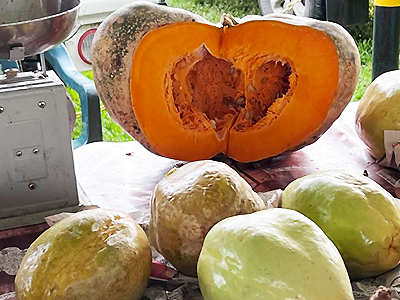
This gorgeous Caribbean-grown pumpkin at market shows the tough outer skin, the softer flesh on the inside, and then the seeds and pulp in the very center.
WHAT KINDS OF PUMPKINS ARE GOOD FOR COOKING?
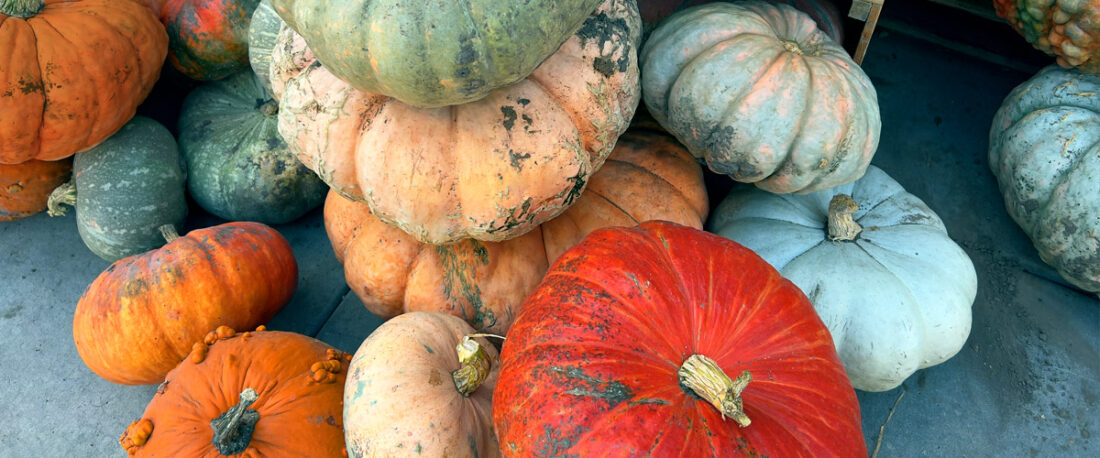
The best pumpkins for eating are smaller, and will often be labeled “pie” or “sweet” pumpkins. Those giant monsters piled in front of the grocery store for carving? Carve them, and save the seeds, but know you’ll get the best flavor from pumpkins grown for consumption.
You may even want to try growing some yourself. Some of our favorite varieties for cooking include:
French Heirloom (Musquee de Provence) round, flatter pumpkin with rich orange flesh and fewer seeds)
Jarrahdale- these are kinda funky greenish colored on the outside but they have a soft, almost creamy texture. Did somebody say curry?
For baking and desserts, we like sweeter pumpkins, like the Pam, Cotton Candy, Long Pie pumpkins (Nantucket pumpkins) and if you can find it, the Dickinson pumpkin.
Recipe Break: Delicious Pumpkin Meal Ideas
One of our secret recipe cooking blogs is Gina Homolka's SkinnyTaste. We have ALL her cookbooks and are a little obsessed. I have never had any of her recipes come out wrong, they are simple to follow, and the ingredients are easy to find.
Enjoy some of our favorite pumpkin recipes from Gina.